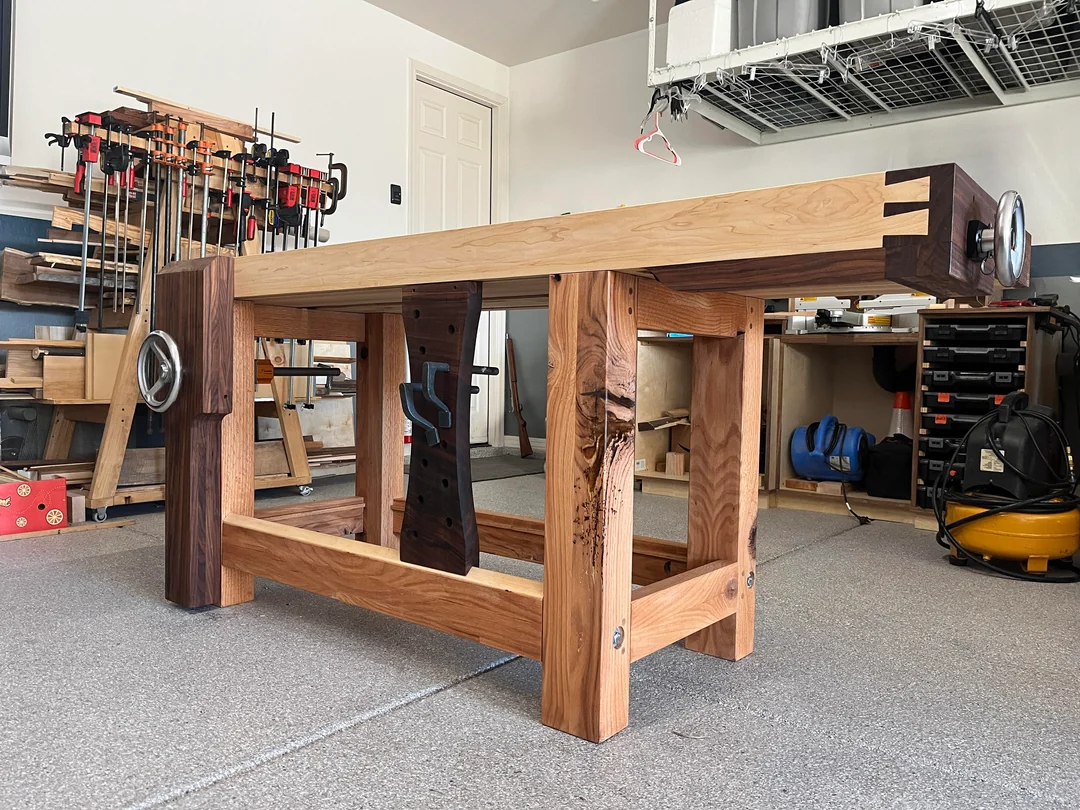
Workshop Wall Storage: Open Shelves, Enclosed Cabinets, or Hybrid?
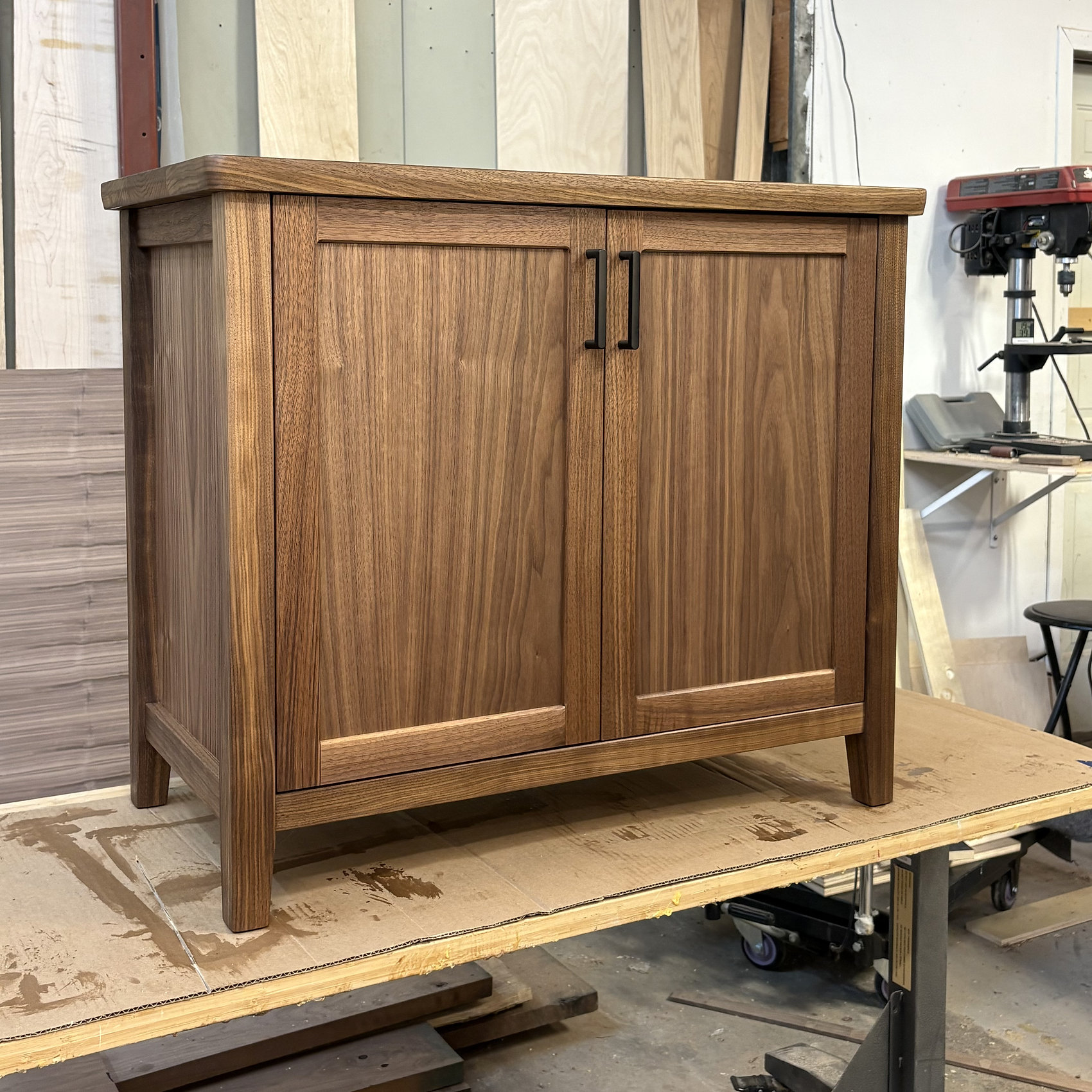
Open Shelves: Visibility and Accessibility First
If your priority is grabbing tools quickly without breaking stride, open wall shelves are hard to beat. Everything stored on them stays clearly visible and easily accessible; no doors to open, no rummaging through enclosed spaces to find what you need.
Mounting shelves on the wall also keeps your floor clear. The space directly beneath them leaves room underneath for large tools or even your workbench, which matters in a shop where floor area is limited.
Open shelving is also one of the most material-efficient storage options you can build. There is minimal materials needed compared to a full cabinet with doors and a face frame, making it a low-investment starting point for a new shop. Explore: Tool Storage Shelves.
Enclosed Cabinets: When Concealment Makes Sense
Enclosed cabinets trade instant visibility for a tidier appearance and protection from ambient shop conditions. If your workshop doubles as a garage or shares space with a living area, doors can make the difference between a space that feels manageable and one that feels chaotic.
The practical downside is access: anything behind a closed door requires an extra step to retrieve. For tools or supplies you reach for less often, finishing materials, spare hardware, seasonal items, that trade-off is minor. For the chisels and marking gauges you pick up every session, it can slow you down. Matching the storage type to how frequently you use what's inside is the key decision.
Hybrid Wall Cabinets: Combining Both Approaches
A hybrid design gives you enclosed storage and an open shelf section in the same unit. One well-documented example uses half sheet of plywood, a piece of hardboard, and a short 1x4, joined with pocket-hole screws, a realistic single-afternoon project with modest material costs. Explore: DIY Tool Organization + Storage.
The hybrid approach works well when you have a mix of storage needs on the same wall run: frequently used hand tools on the open shelf where you can see them, and less-accessed supplies behind the cabinet door. You get the accessibility of open shelving where it counts and the concealment of a cabinet where it's convenient.
Matching Storage Type to Your Shop and Workflow
Start by thinking about which tools you reach for every session versus which ones come out occasionally. Everyday items belong in open storage where visibility and access are instant. Occasional-use supplies or anything you prefer to keep protected behind a door are better candidates for enclosed storage.
Shop conditions matter too. A dedicated shop with good dust collection may tolerate open shelving across the whole wall. A garage shop that doubles as a general storage space, or one exposed to humidity swings, may benefit from enclosed sections protecting finishes, blades, and precision tools.
Floor space is a practical constraint that often settles the question. Wall-mounted shelves keep the area beneath them usable, leaving room underneath for large tools or even your workbench, which is a meaningful advantage in a small shop. If your layout already has floor cabinets or stationary tools occupying the perimeter, wall shelves above them are an efficient way to add capacity without crowding the floor further.
Tagged with:
About the Author
WoodworkersArchive Editorial
Practical guides, project ideas and woodworking resources from WoodworkersArchive.
Get More Woodworking Tips
Join our newsletter for weekly woodworking tips, project ideas, and exclusive content.