
Router Table Layout Planning: Bench-Mounted vs Standalone
Two Layouts Defined
A bench-mounted router table sits on top of an existing workbench or worktable and is clamped in place during use. A standalone floor-standing table is a self-contained unit that occupies its own floor space and stays in position permanently. The practical difference between the two comes down to how much dedicated space you have, whether your shop needs a fixed routing station or a flexible one, and what you plan to do when the table is not in use.
Bench-mounted tables come in two broad configurations: open-base style and cabinet style. Both types clamp to a benchtop or worktable and accommodate most common routers, so the choice between them affects storage and rigidity more than basic router compatibility.
Space Footprint: Bench Surface vs Floor Area
A bench-mounted table consumes bench surface rather than floor area. That trade-off suits shops where floor space is limited but a workbench already exists with room to spare. Two benchtop models reviewed by Woodsmith each measured 16 by 24 inches on their laminate-covered MDF surfaces, which gives a concrete sense of the bench area involved. The Rockler Convertible Benchtop Router Table is slightly more compact at 16-3/8 inches wide by 18-1/2 inches long, making it a better fit for tighter bench runs.
A standalone floor-standing table permanently claims floor real estate but frees up the workbench entirely. If your bench doubles as an assembly surface or general work area, keeping it clear of a clamped router table may be the more practical arrangement. The right choice depends on what you use your bench for and how often you route.
Storage Options for Bench-Mounted Tables
One of the practical advantages of a benchtop table is that it can be stored under a workbench or counter when not in use, reclaiming the bench surface for other work. This matters most in shops where the router table would otherwise sit idle between projects.
The Rockler Convertible's leg system folds flat, which makes it practical to store or transport without disassembling the router mount. If you work in a shared space or move your setup between locations, that foldability is worth factoring into your decision alongside raw surface dimensions.
Configuration Variants: Open-Base, Cabinet-Style, and Wall-Mounted
An open-base benchtop table has a minimal frame beneath the top, keeping weight down and making storage straightforward. A cabinet-style model encloses the base, which can provide a place to stow the router or accessories and reduces dust scatter underneath.
A third placement mode that most buyers overlook is wall mounting. The Rockler Convertible's legs have predrilled mounting keyholes located 16 inches apart, matching the typical spacing for wall studs, allowing the table to hang on the wall when not in use and be lifted off for clamped bench use.
Surface Size and Standard Features
The 16-by-24-inch surface found on the two Woodsmith-reviewed benchtop models is a useful reference point, but it is not a category standard — other benchtop tables will differ. The Rockler Convertible's 1-1/8-inch-thick melamine-coated MDF top and 3/8-by-3/4-inch miter slot sized to accept a standard miter gauge bar are representative of the feature level available at this scale, not universal specifications.
Adjustable fences with dust collection ports and T-track for accessories such as featherboards are common across both open-base and cabinet-style benchtop tables. These features bring benchtop models closer to full-sized table functionality for most joinery and profile work a hobbyist woodworker is likely to attempt.
Dual-Table Setups: When a Second Table Adds Workflow Value
Even if you already have a full-sized standalone router table, a second benchtop model can be worth keeping around. Operations that require two different bits loaded simultaneously — flush trim and pattern routing together, or building up a multi-step molding profile — benefit from having both setups ready rather than swapping bits mid-sequence. This is a workflow convenience rather than a necessity, but it is the clearest case for running both layouts in the same shop.
If you are building rather than buying, plans for a router table designed to integrate with a tablesaw wing and a portable standalone version offer two different starting points depending on your shop's direction. Explore: Router Table for Tablesaw; Portable Router Table.
Choosing Based on Your Shop Constraints
A bench-mounted table is the stronger choice when floor space is limited, the router table will be used intermittently, and you already have a stable workbench. Benchtop tables can easily be stored under a workbench or counter when not in use, and the Rockler Convertible adds wall mounting as a further option, with keyholes spaced 16 inches apart to match standard stud spacing. A standalone floor-standing table makes more sense when routing is a regular part of your workflow, you want a dedicated station that does not compete for bench space, and your shop layout can absorb the permanent footprint.
Before deciding, consider how stable your existing bench is, since a benchtop table's working behavior depends partly on what it sits on. Think about how often you will route: a dedicated standalone station justifies its floor cost only if you use it regularly. The wall-mount option on the Rockler Convertible uses keyholes located 16 inches apart to match standard stud spacing, which is worth checking against your wall before treating it as a firm plan. And if you already have a full-sized table, a compact benchtop model as a secondary setup costs relatively little and solves a genuine workflow problem for multi-bit operations.
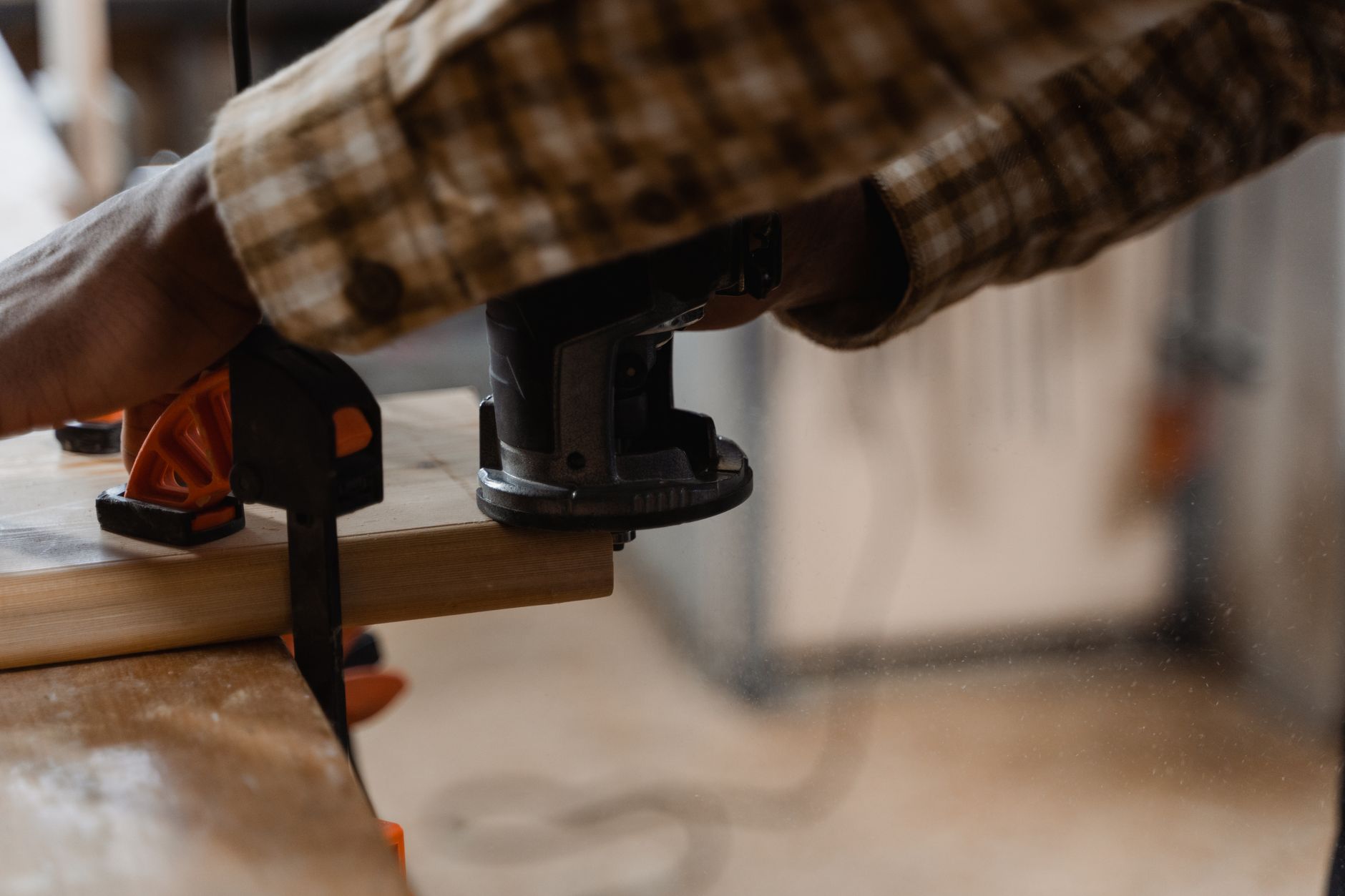
Image: Illustrative photograph: A carpenter works with an electric router on wood indoors, showcasing craftsmanship. — Photo by Tima Miroshnichenko on Pexels.
Tagged with:
About the Author
WoodworkersArchive Editorial
Practical guides, project ideas and woodworking resources from WoodworkersArchive.
Get More Woodworking Tips
Join our newsletter for weekly woodworking tips, project ideas, and exclusive content.