
How to Start Woodworking with Limited Tools
How to Start Woodworking with Limited Tools
Starting a woodworking hobby doesn't require an expensive garage full of equipment. With just a handful of essential tools and practical knowledge, you can build meaningful projects that will give you satisfaction and help develop your craftsmanship over time.
The Truth About Beginner Tool Requirements
Many people delay starting woodworking because they believe they need thousands of dollars in equipment. The reality is far different. Most beginners can complete quality projects with five to seven core tools, allowing them to focus on learning fundamental skills rather than investing heavily upfront. This lean approach actually teaches efficiency and smart project planning, skills that even experienced woodworkers value.
The key is choosing tools that handle multiple tasks effectively. A versatile drill can fasten screws and help with assembly. A circular saw cuts both straight lines and curves with the right techniques. By starting small and adding specialized equipment only when specific projects demand it, you build your toolkit gradually while matching your growing expertise.
Essential Tools to Begin Today
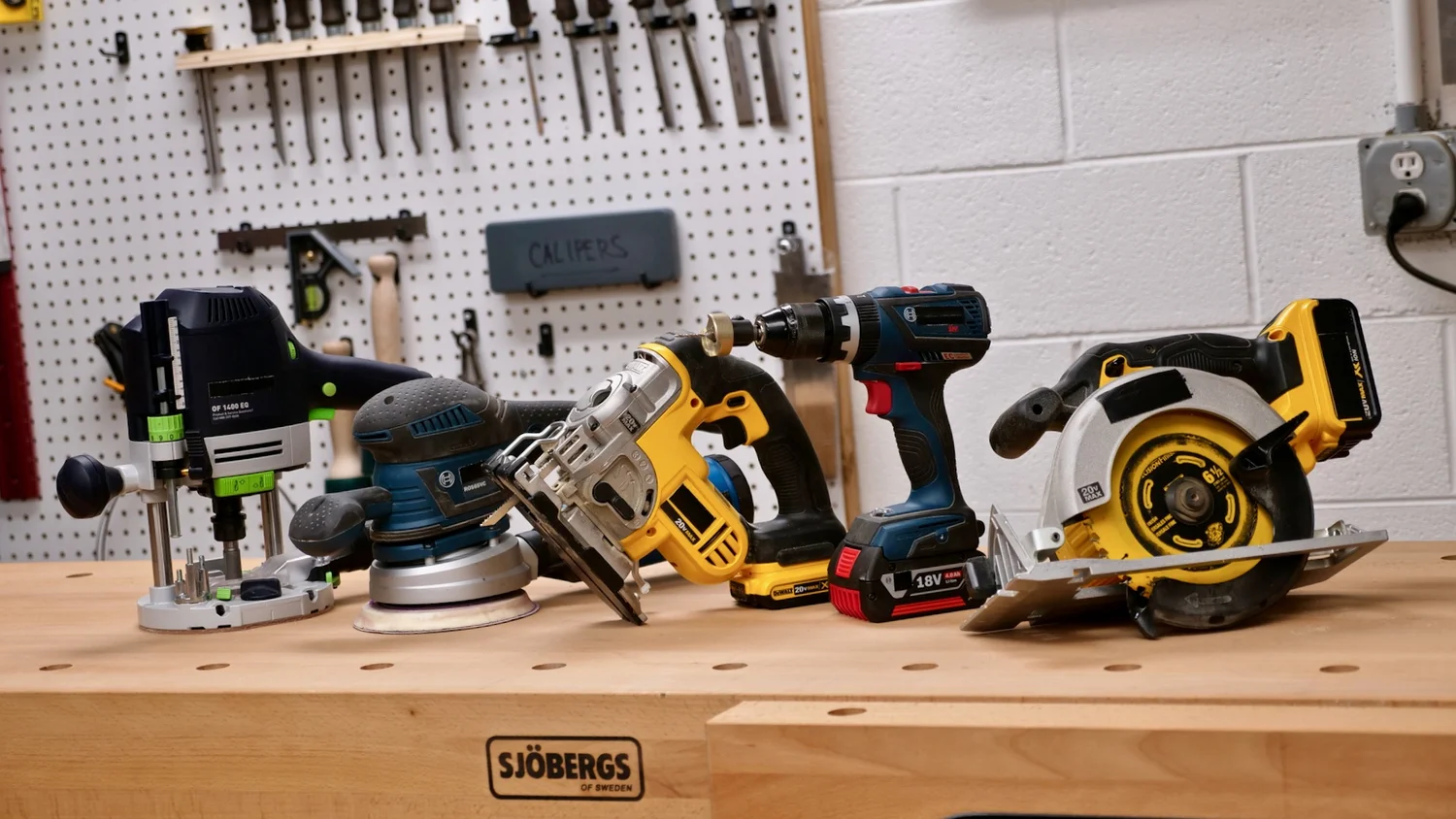
A cordless drill is your most important investment. This single tool handles fastening, hole drilling, and even mixing paint or finish. Pair it with a circular saw for ripping and crosscutting lumber to size, and you have covered the two most common tasks in woodworking. Add a random orbit sander to smooth surfaces before finishing, and you're already equipped for dozens of beginner projects.
A jigsaw expands your possibilities by allowing curved cuts and intricate shapes that straighter saws cannot achieve. Keep hand tools in your arsenal as well: a combination square for layout accuracy, clamps to hold workpieces steady, and a tape measure for precise dimensions. These basics cost far less than you might expect, yet they serve woodworkers for decades.
When you need to build a solid work surface, the Easy Workbench Plan requires only a circular saw and cordless drill, making it perfect for establishing your workspace without additional investment. Once you have your workbench set up, you'll find it easier to manage subsequent projects.
Hand Tools for Budget-Conscious Builders
Hand saws, chisels, and hand planes complement power tools beautifully, often for less money than premium power tool brands. A Japanese pull saw or quality western saw handles detailed cutting that leaves a cleaner edge than power tools alone. Chisels let you fine-tune joinery and create details that make projects look handcrafted rather than mass-produced.
The advantage of hand tools is they teach you proper technique and respect for materials. You slow down, measure twice, and cut once, building habits that serve you throughout your woodworking journey. Japanese hand tools particularly offer exceptional value, providing professional-quality results without breaking your budget.
For very simple projects, you might use little more than a handsaw, hammer, and glue. A Box Frame Rectangle Side Table can be built with off-the-shelf lumber and minimal tools, making it ideal when you're testing your skills before committing to larger purchases.
Choosing Your First Project Wisely
Your initial project should reinforce basic skills without overwhelming you. Simple boxes, picture frames, or small shelves teach layout, cutting accuracy, assembly, and finishing. These projects use straightforward techniques that you can apply to more complex designs later.
Start with softwood like pine, which is forgiving, affordable, and readily available at any home improvement store. As you gain confidence, move to hardwoods that showcase better aesthetics and durability. Never underestimate the learning value of simpler wood species and humble projects.
The progression from one project to the next builds both skills and your toolkit. You might discover that a specific project requires a tool you don't own, and that becomes your justification for the next equipment purchase. This organic growth means you only buy what you actually use.
Setting Up Your Workspace
You don't need a dedicated shop. A garage corner, basement area, or even a covered outdoor space works perfectly when you plan your layout carefully. Arrange your most-used tools within arm's reach, keeping your workbench at the center. Mobile storage solutions like rolling carts make it easy to tidy up after each session.
Ventilation matters more than space when you're sanding or applying finishes. A simple shop vacuum collects dust while protecting your lungs and keeping your area cleaner. Adequate lighting reveals details and helps you spot grain direction, which affects how wood finishes. These practical touches cost little but dramatically improve your experience.
Wood Selection and Buying Smart
Your first purchases should emphasize quality lumber over quantity. A few well-selected boards allow you to plan projects carefully, minimizing waste. Learn to inspect wood for defects, understanding grain direction, knots, and any warping before committing to your project design.
Building relationships with local lumber yards pays dividends. Staff can advise you on species appropriate for your projects and often have scrap piles offering great deals for smaller pieces. Home improvement stores stock basic softwoods conveniently, though prices may be slightly higher.
Mastering Layout and Measurement
Precise measurement is where beginners often falter, yet it costs nothing to practice. Spend time with your combination square and tape measure, marking layouts clearly before making any cuts. Accuracy in layout prevents wasted material and produces better-looking results, even when your tool quality is modest.
A marking gauge creates consistent lines for reference, while a sharp marking knife cuts cleaner lines than pencil. These small additions to your toolkit yield outsized improvements in precision. Many experienced woodworkers will tell you that careful planning beats expensive tools every single time.
Building Confidence Through Completion
Your first successful project matters far more than its complexity. Finishing something you built, even a simple step stool or cutting board, generates motivation for your next challenge. This momentum carries you through inevitable mistakes and keeps you engaged with the craft.
Share your completed work with others. The encouragement and practical feedback you receive builds confidence and often reveals techniques you hadn't considered. Woodworking communities, both online and local, celebrate beginner accomplishments and offer guidance as you advance.
Growing Your Toolkit Intentionally
As you complete projects, certain limitations become clear. Maybe you want to try inlays, prompting you to add a router. Perhaps curved work inspires you to invest in a band saw. Let your projects guide your purchases rather than the reverse. This approach ensures every tool earns its place in your workshop through actual use.
Budget for quality where it matters most. Better drill batteries stay reliable for years, while budget sanders might disappoint quickly. Tools you use constantly deserve your investment, while specialized equipment used occasionally needn't be premium grade.
The Long-Term Advantage
Beginning with limited tools teaches resourcefulness that seasoned woodworkers envy. You learn to adapt, improvise, and appreciate well-designed tools. When you eventually add equipment, you understand its purpose and use it effectively rather than letting it gather dust.
The most rewarding part of starting this way is discovering that woodworking fundamentals remain constant whether you use hand tools or the latest technology. The principles of grain direction, wood movement, and solid joinery apply regardless of your budget. Master these concepts early, and your future projects will reflect true craftsmanship.
Tagged with:

About the Author
Aske from The Woodworker's Archive
Passionate about woodworking and helping makers bring their projects to life. Sharing tips, techniques, and inspiration from The Woodworker's Archive.
Get More Woodworking Tips
Join our newsletter for weekly woodworking tips, project ideas, and exclusive content.
Related Articles
How to Recycle Scrap Wood: Complete Guide for Woodworkers
Discover 5 proven methods to recycle scrap wood sustainably. From DIY projects to professional disposal, learn how to reduce waste and save money.
List of Sites Where You Can Sell Your Woodworks: Top Platforms for 2025
Discover the best online marketplaces and local venues to sell your handmade woodworking projects, from Etsy and Amazon Handmade to craft fairs and shops.