
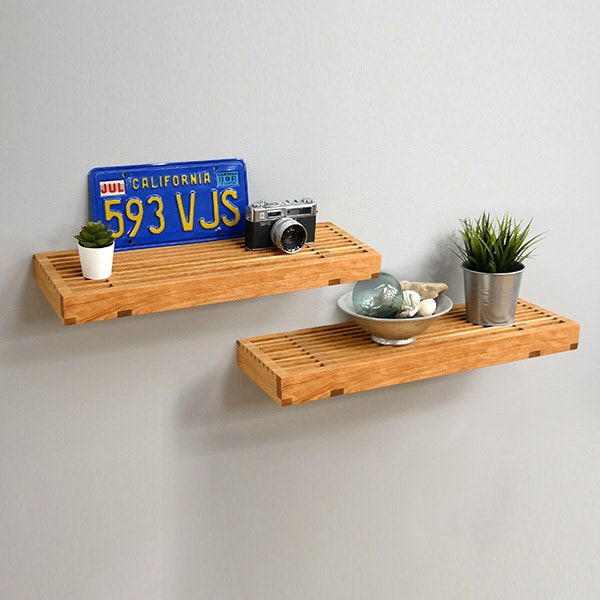
Been looking at this plan and I'm wondering about the cross lap joint itself. That seems like the detail that makes the shelf interesting visually, but I'm curious how much structural work it's actually doing versus just the hidden brackets. Is the lap joint mostly for looks, or does it contribute to the shelf's rigidity? I've done a few lap joints on frames but never thought about them as a design accent before.
The lap joint's doing real work. Where it crosses, it's resisting racking and torsion that brackets alone won't catch - especially if the shelf runs long or takes uneven load. But you're right that visually it's the detail that reads. The brackets are hidden, so the joint carries the design story. On a floating shelf, I'd sketch whether the plan shows the lap seated tight enough that it stays in tension, or if it's mostly decorative and relying on the fasteners. That changes how fussy the fit needs to be.
That tension detail is exactly what I need to look for in the plan. So if the lap is just sitting loose and the fasteners are doing all the work, I should probably treat the fit as more decorative than structural. That changes how much fussing over the joint is worth it.
Sign in to join this discussion.
Sign in to reply