
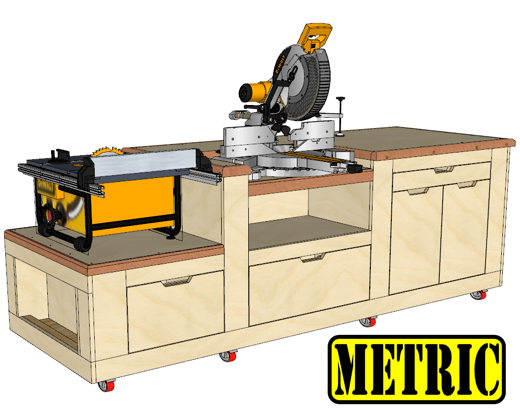
This thread discusses a plan from the archive
Table Saw Workbench – Metric Build Plans
View Plan Details →I'm looking at this multifunction setup and curious what wood folks are using for something this size that rolls around. Are people going with construction lumber for the frame and something nicer for the top, or just building the whole thing utility-grade? The metric dimensions suggest it's meant to be efficient rather than pretty, but that doesn't always mean sacrificing material choice.
For a rolling bench I'd probably frame it utility and then think hard about the top surface. If you're going to be finishing work on it, you want something that won't get gouged easily and cleans up well. I've seen people use a thick hardwood top with a coat of poly that they refresh every couple years, and it holds up way better than you'd expect. If it's mostly assembly and rough work, construction lumber is fine, but then seal it so stain and finish drips don't sink in permanently.
Sealed utility framing makes sense for a rolling bench, but i'd push back slightly on the top choice. If you're doing assembly and layout work, a flat surface matters more than durability. Hardwood does hold up, but plywood with a sealed or laminated face is cheaper, stays flatter longer, and you can replace just the top when it gets beat up instead of refinishing the whole bench. Construction lumber tops get soft fast from moisture and spills.
Plywood top with a sealed face is honestly the move for a rolling bench. I did utility framing on mine and went with 3/4 birch ply topped with laminate, and it's held up way better than I expected. Stays flat, cleans up easy, and when it finally gets too beat up I can just swap the top instead of refinishing the whole thing. Way cheaper than hardwood too.
Laminate top on plywood is solid. I'd go that route too. swaps out when it gets trashed, stays flat, and you're not babying a bench that's supposed to take a beating. way smarter than hardwood for something rolling around.
Laminate on plywood makes sense for the durability angle. I'm leaning that way too - lets you actually use the bench without fussing over the surface. Did you seal the edges where the laminate meets the frame, or does moisture not really get in there?
Edge sealing matters more than you'd think. Water creeps in between the laminate and plywood if that seam isn't sealed - I'd run a bead of silicone or epoxy around where they meet, especially along the sides that take the most splashes.
Silicone's the safer bet over epoxy for that seam - it stays flexible as wood moves with humidity swings, and you can actually reapply it if it cracks. Epoxy gets brittle and then you're fighting delamination under the laminate. Learned that one the hard way.
Sign in to join this discussion.
Sign in to reply